By 2030, we aspire to a Lebanon defined by unity, resilience, and prosperity. A society whose diverse components coexist in harmony, where economic opportunities are accessible to all, and where sustainable development forms the foundation of a future built on justice and peace. Our vision stems from a deep belief in genuine change, inclusive governance, and active participation in shaping a better future.

The Seven Strategic Pillars and Objectives
1. Peace and Unity
- Objective: Enhance social cohesion and reduce sectarian tensions.
- Strategies: Interfaith dialogues, joint community initiatives, and training in mediation and conflict resolution.
- Outputs: A decline in acts of sectarian violence and increased cooperation between different communities.
2. Economic Empowerment
- Objective: Improve economic opportunities and reduce youth unemployment.
- Strategies: Entrepreneurship programs, skill development in emerging fields (technology, renewable energy, digital media), and collaboration with the private sector and organizations to provide job opportunities and internships.
- Outputs: Increased youth employment rates and a supportive environment for young entrepreneurs.
3. Sustainable Development
- Objective: Promote environmental sustainability and responsible resource management.
- Strategies: Green projects (afforestation, waste management, green economy, renewable energy), awareness campaigns, and youth advocacy for climate policies.
- Outputs: Improved environmental conditions and elevated community awareness regarding sustainability issues.
4. Education and Capacity Building
- Objective: Improve the quality of education and develop core skills for future leaders.
- Strategies: Curriculum reform (incorporating peace studies, civic education, and practical skills), capacity-building workshops (leadership, advocacy, project management), and ensuring equitable access to quality education.
- Outputs: An educated, skilled young generation capable of addressing Lebanon’s challenges.
5. Civic Engagement and Governance
- Objective: Increase youth participation in political and community decision-making processes.
- Strategies: Local and national youth councils, civic participation programs (elections, community service, public advocacy), and promoting transparency and accountability.
- Outputs: Greater youth representation in governance and higher trust in public institutions.
6. Health and Wellness
- Objective: Improve public health as well as the mental and physical well-being of young people.
- Strategies: Mental health support, health education programs (nutrition, preventive care), and youth-friendly, affordable health services.
- Outputs: Improved physical and mental health, and a reduction in health disparities.
7. Cultural and Artistic Expression
- Objective: Celebrate Lebanon’s rich heritage and support artistic expression.
- Strategies: Cultural festivals, arts programs (grants, training, mentorship), and international cultural exchanges.
- Outputs: A vibrant cultural scene reflecting Lebanon’s diversity and the creativity of its youth.
Local Youth Vision for Tripoli 2030
By 2030, we aspire for Tripoli to be a city of peace and opportunity, where its youth recover from marginalization and neglect to lead a local transformation toward economic justice, institutional integration, and social cohesion. We believe that Tripoli, rich in its diversity and history, is capable of serving as a model for bottom-up peacebuilding led by resilient and inclusive youth.
Local Strategic Pillars and Objectives
1. Peace and Unity in Tripoli
- Objective: Address tensions between neighborhoods and promote local coexistence.
- Strategies: Vibrant dialogues among youth from different areas, community mediation training, and joint sports and arts initiatives.
- Outputs: A reduction in local outbreaks of violence and increased trust among neighborhood residents
2. Economic Empowerment for Tripoli’s Youth
- Objective: Reduce high unemployment rates and boost the local economy.
- Strategies: Support for small and medium-sized enterprises (SMEs), training in future professions (renewable energy, programming, tourism), and connecting youth to local and external labor markets.
- Outputs: A decrease in youth unemployment rates and the emergence of successful local economic initiatives.
3. Sustainable Development (Environmental and Social)
- Objective: Address environmental degradation in Tripoli (waste, pollution) and link environmental health to social cohesion.
- Strategies: Youth-led cleanup and waste management campaigns, afforestation and public space beautification projects, and environmental awareness programs in schools and neighborhoods.
- Outputs: Tangible improvements in the local environment and a heightened sense of belonging among youth toward their city.
4. Education and Capacity Building
- Objective: Elevate the quality of both non-formal and formal education to align with Tripoli’s needs.
- Strategies: Training workshops in schools and youth centers (leadership, advocacy, conflict resolution), support for access to education for marginalized groups, and partnerships with Tripoli’s universities.
- Outputs: Tripoli’s youth become more skilled and better equipped for active participation.
5. Civic Engagement and Local Governance
- Objective: Integrate youth into municipal and local decision-making.
- Strategies: Advisory municipal youth councils, youth seats on municipal committees (Social Affairs, Environment, Planning), and training on municipal law and budgeting.
- Outputs: A genuine youth presence in decision-making halls, along with increased local transparency and accountability.
6. Mental Health and Well-being
- Objective: Respond to the worsening mental health crisis among Tripoli’s youth.
- Strategies: Establishing safe spaces for psychological support, peer training in psychological first aid, and awareness campaigns to destigmatize mental health.
- Outputs: Youth who are more psychologically resilient and aware of mental health.
7. Cultural and Artistic Expression
- Objective: Restore Tripoli’s role as a cultural and historical capital.
- Strategies: Community festivals in various neighborhoods, support for young artists (music, mural painting, theater), and digitizing and highlighting Tripoli’s heritage through digital media.
- Outputs: A vibrant youth cultural movement that strengthens a shared identity and provides positive alternatives to extremism and violence.
Summary:
- National Vision (Lebanon 2030): Focuses on structural reform, inclusivity, and building democratic institutions capable of engaging youth in public policymaking.
- Local Vision (Tripoli 2030): Focuses on addressing marginalization and neglect, building peace from the ground up, and creating economic and psychological opportunities tailored to the city’s reality.
About “WAY” Association (Women – Adults – Youth)
WAY (Women – Adults – Youth) is a non-profit Lebanese civil association founded in the city of Tripoli in 2009. It specializes in peacebuilding, social cohesion, and the empowerment of youth and women. Since its inception, the organization has worked to promote the values of citizenship, participatory democracy, and anti-corruption through programs focused on environmental justice, good governance, and cooperation among Lebanon’s diverse communities.
The organization was registered under Notice and Receipt No. 2283 issued by the Lebanese Ministry of Interior on December 10, 2009. In 2013, it established “WAY for Training and Capacity Building S.A.R.L.” to expand the scope of its training and consultancy services.
Vision, Mission, and Core Values
- Vision: Empowered communities capable of identifying, initiating, and sustaining their choices within an environment governed by justice, peace, and democratic participation.
- Mission: Developing human and institutional capacity through high-quality training and consultancy programs that contribute to achieving positive, sustainable change, and enhancing the role of youth and women as primary actors in peacebuilding and local development.
Core Values
- Empowerment and Participation: Engaging local communities in the design and implementation of programs that serve them.
- Justice and Transparency: Promoting good governance and anti-corruption as essential pillars of peace.
- Diversity and Inclusivity: Working with all Lebanese components without discrimination, respecting cultural and religious diversity.
- Sustainability: Building local capacities that guarantee lasting impact beyond the lifecycle of projects.
- Professionalism and Quality: Relying on top expertise and methodologies in execution and evaluation.
Achievements and Implemented Programs
Since 2020 alone, the organization has trained more than 680 individuals in civic education (240 individuals), anti-corruption advocacy (180 individuals), environmental awareness (250 individuals), and peacebuilding and dialogue (130 individuals). It has also implemented ten successful projects funded by international donors since 2013.
Key Implemented Programs
- Young Women Leadership Development Program (YWLD): Implemented in 2013, funded by SIDA (Sweden), targeting 600 young women in Lebanon and the Arab region.
- Youth and Citizenship Program: Implemented in 2014, funded by Zivik/ifa (Germany), targeting 150 young people. “HEY” Women’s Policy Center: Implemented between 2014 and 2016, funded by SIDA.
- Empowering Peacebuilding Agents Program (Phases 1 & 2): Implemented in 2015 and 2016, funded by Zivik/ifa.
- Lebanese and Syrians Building Peace Together (Phases 1 & 2): Implemented in 2017 and 2018, funded by Zivik/ifa.
- United We Stand… Divided We Fall: Implemented in 2019, funded by Zivik/ifa.
- Transitional Justice: Our Path to Social Cohesion: Implemented between 2023 and 2024, funded by the Berghof Foundation.
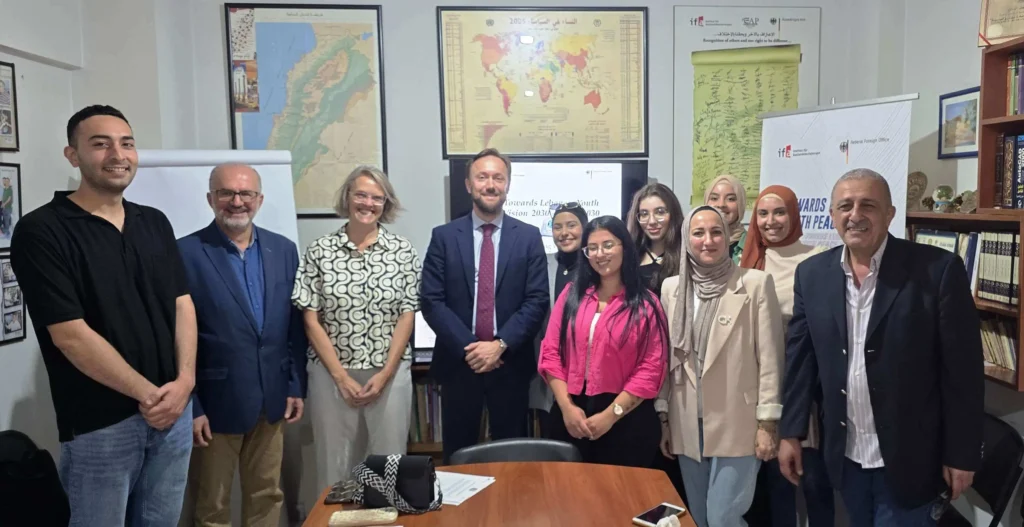
- Towards a Youth Vision for Lebanon 2030 (TLYV 2030): Launched in 2025, funded by Zivik/ifa.
- WAY Program for Fortifying Civil Peace & WAY Award: An ongoing program in schools since 2009.
Certified Training Programs
The WAY Center for Human Training and Capacity Building offers specialized programs in executive leadership, organizational restructuring, institutional development, community assessment, M&E (monitoring and evaluation), family counseling, and parenting guidance.
Partners and Funders
- National Partners: Lebanese University, Tripoli Technical Institute, Beirut Arab University Alumni Association, Hadatha Association (Akkar), Bait Al-Adab wal Uloom, Ezdehar Association, Chekka Development Council, and the municipalities of El Mina, Bcharre, Berqayel, El Mohammera, and Haizouq, among others.
- Regional Partners: IDA and Ahliya Foundation (Egypt), New Growth Foundation (Jordan), Youth Without Borders (Tunisia), and VIVALDI Group (Morocco).
- International Partners & Donors: SIDA (Sweden), Zivik/ifa (Germany), Berghof Foundation (Germany), SUDGEST AID (Italy), and DOT (Canada).